
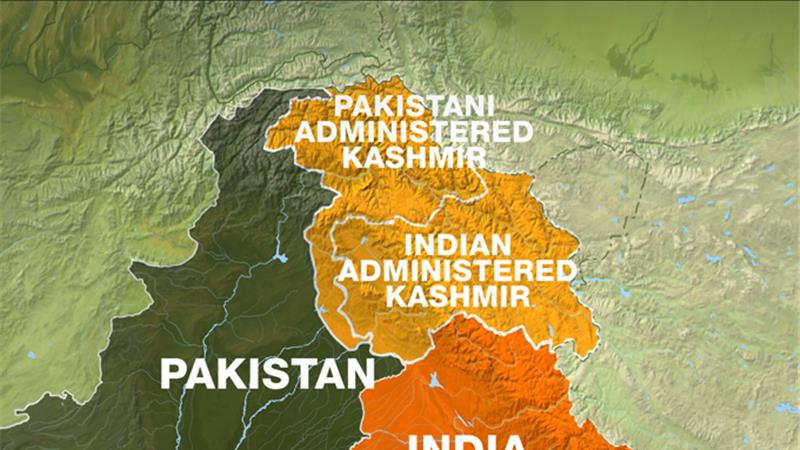
For decades, Pakistan has opposed the merger of Jammu and Kashmir with India on the grounds of it being a disputed land. Following the same argument, the Indian government, too, can question the sovereign and political existence of Pakistan by citing several clauses of International law and jurisprudence, explains Dr. Suvrokamal Dutta.
As per the Vienna Convention of the Law of Treaties, 1969 a material breach of any clause of a bilateral or trilateral treaty by one of the signatories allows the other signatory (or signatories) to terminate the accord. The Partition of India Plan (Lord Mountbatten Plan), 1947 is an international treaty signed by the then British Government, the Muslim League and the Indian National Congress. It stipulated that India would attain her freedom at the midnight of August 14, 1947 and British India would be divided into India and Pakistan.
The final document, known as the Independence of India Act under the royal proclamation, was signed and sealed by the British Monarch. Thus it was implicitly agreed that none of the three parties involved would violate any of the clauses of the document.
However, the first act of transgression occurred when Pakistan attacked Jammu and Kashmir. This event compelled the then sovereign ruler of the state to seek help from the newly independent Indian government. The Indian government acceded to the request, and the deed of merger was signed with Jammu and Kashmir. It was subsequently ratified by the provincial assembly of the state of Jammu and Kashmir.
According to the Mountbatten Plan, the Princely states of India were given the choice of merging with India or Pakistan; or remaining independent. The states of Bahawalpur and Kalat opted for Pakistan. Indistinguishably, Jammu and Kashmir chose India.
The Raja Hari Singh Pact of Jammu and Kashmir with the Government of India came into existence because of the erstwhile treaty of the Indian Independence Act. If this Act is considered an international treaty, it implies international validity of the accession of Jammu and Kashmir with India. If Pakistan can so shamelessly violate and refuse to accept the merger of Kashmir with India, then India, too, taking a leaf out of the same provision, can rightfully question the creation and existence of Pakistan, based on the aforementioned clause of the Vienna Convention.
Second, the Vienna Convention of the Law of Treaties also mentions that the impossibility test of performance of a treaty is a valid ground for its nullification and termination.
“As per the impossibility performance test, a treaty becomes invalid if one of the existing parties shows that it is incapable of implementing the treaty in practical circumstances.”
Article 61
Pakistan, by attacking Jammu and Kashmir in 1948 and annexing a part of it thereby, has demonstrated to the world that it is incapable of implementing the Mountbatten Plan in both letter and spirit. As such, the clause of impossibility test of performance of a treaty would apply in this case. In other words, India has every right to nullify that part of the Mountbatten Plan, which talks about the creation of Pakistan.
It is true that the Vienna Convention does allow treaties to invalidate the existence of sovereign states, or for changes of political boundaries between states. However, in this particular case, this clause cannot be applied by Pakistan, simply because Pakistan has violated the very clauses of that international treaty by which the state of Pakistan itself was created. Thus, being an initial violator, it cannot question the role of India in relation to East Pakistan (present day Bangladesh).
The current Pakistani government can put forward its argument concerning the princely states of Junagadh and Hyderabad. The Mountbatten Plan did talk about referendum, popular will or the merger of princely states with India or Pakistan under its various clauses. India exercised its option in relation to these two states because the majority of the people of Junagadh and Hyderabad wanted to stay in India. Therefore, Pakistan cannot question the Indian role in relation to these two states.
Through the legal maxim Rebus Sic Stantibus that comes under the doctrine of International Law, the very identity of Pakistan can be questioned.
Edward Collins writes in his book ‘International Law in a Changing World’: “It is widely recognized that if fundamental changes in the circumstances upon which a treaty take place, these changes may be invoked as a ground for the termination of the treaty. The principle known generally as the doctrine of Clausula Rebus Sic Stantibus is based on the assumption that there is an implied clause in every treaty that provides that the agreement is binding only so long as the material circumstances on which it rests remain unchanged.”
When the basic identity of Pakistan can be questioned, it would be sensible to stop its claim over the state of Jammu and Kashmir and hand over to India the so called ‘Azad Kashmir’ – the northern areas, which Pakistan has recently designated as its fifth province and the areas of that part of Kashmir which was seceded by Pakistan to China.
If Pakistan is truly sincere about the peace process to be successful, it should change its anti-India mindset once and for all. The ball is now in their court.
The author is a renowned television personality, foreign affairs expert and a political critic.


